

Since the end of the Gulf War, American strategic interests in the Middle East have set the pace of Saudi and U.S. relations. However, diverging stands on key issues like energy, human rights, military security and oil trading have accumulated for the last six years culminating in Saudia Arabia finding common ground with other partners, including China.
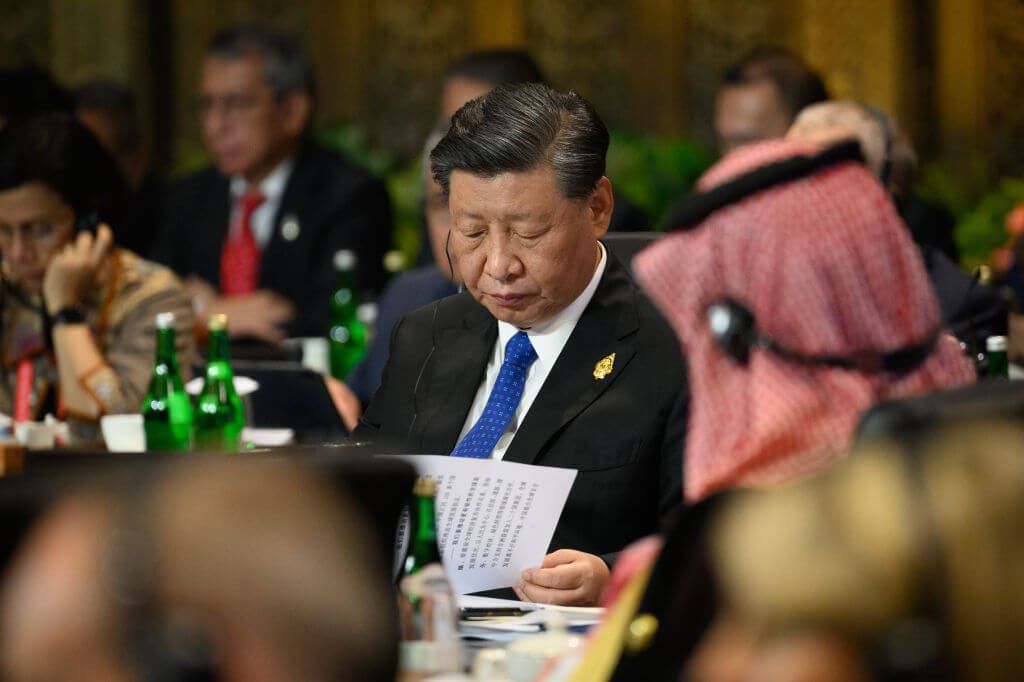
During the first week of December 2022, Chinese President Xi Jinping met Saudi King Salma in Riyadh. The media praised Xi’s three-day visit to the Kingdom as Xi received a lavish welcome from his counterpart the King of Saudi Arabia with a firm handshake. The meeting comes days after “Washington closed a rift with Riyadh on Dec. 6 with the District of Columbia federal court dismissal of a lawsuit against Saudi Crown Prince Mohammed bin Salman, accused with the killing of dissident U.S-based journalist Jamal Khashoggi.”[1]
China marked the visit as a milestone for present and future foreign relations with Saudia Arabia setting it on ink with a "comprehensive strategic partnership agreement". The agreement positioned Riyadh on a “top-tier status in China’s foreign relations”[2] Accordingly, “Chinese leader heralds ‘new era’ in ties with the Arab world”[3]
- Read more: Why should Europe be concerned about the declining presence of the U.S. in Latin America?
The signatories’ strategic partnership deal is intended to deepen economic relations on a timely occasion. Predominantly, now that relations between the U.S. and Saudi face tense moments rooted in disagreements on energy policy, US security guarantees in the region against Iran and human rights vis-a-vis selected groups. Pertinent aspects of the deal include energy cooperation, technology, security and territorial integrity affirming support for each other’s core interests. The initial investment between China and Saudia Arabia “would seal initial agreements worth $30 billion.”[4]
President Xi Jinping met with King Salman bin Abdulaziz Al Saud of Saudi Arabia. China sees Saudi Arabia as an important force in the multi-polar world and attaches great importance to developing the comprehensive strategic partnership with SaudiArabia. pic.twitter.com/yCj1l3Ou3l
— Hua Chunying (@SpokespersonCHN) December 9, 2022
The Gulf region has long sought economic diversification and this deal could potentially set a new scene for international relations. Washington is worried about an expanding sphere of influence – as Chinese presence in the Gulf will be seen as problematic. For instance, Huawei's participation in building 5G networks in most states in the Gulf could enable new security and defence architectures propelled by efficient digital interconnections. In addition, “Saudi Arabia accounts for 17% of the Asian giant’s oil imports”[5] becoming the largest oil importer of China in 2021.
As recent security and political ties have become more important, Washington’s deal with Iran has Riyadh concerned. Similarly, China has had kept resentment over western deals with Taiwan impacting its ability to compete in the international fora. In turn, policymakers in Teheran begin to question Chinese intentions in the region after a joint statement was released on Friday upon the meeting of China and the Gulf Cooperation Council (GCC) concluded. In the statement, “nations referred to Iran as a supporter of regional terrorist groups and a proliferator of ballistic missiles and drones.”[6] In this context, Iran objected to the Chinese visit to Saudia Arabia, questioning the Sino-standing foreign policy of non-intervention and proceeded to summon China’s ambassador in Teheran.
After this round of meetings, three major takeaways can be discerned. Firstly, the meeting between China and Saudia Arabia mainly revolved around energy, oil, money and sending a message to the Americans. Incidentally, Iran has entered the political and security conversations where alliances are likely to play a determinant role in the Gulf region. Finally, as China continues expanding its presence in the Gulf, we will likely see further cooperation in other areas such as education, language and culture, public health, and green transition.
Author: Katja-Elisabeth Herrmann
 Katja-Elisabeth works as a research fellow at the Warsaw Institute. She has a background in Transatlantic Affairs from the College of Europe (Warsaw, Poland) and the Fletcher School of Law and Diplomacy at Tufts University. Additionally, Katja-Elisabeth holds a BA in International Relations and International Organizations which she combined with a degree in International and European Law from the University of Groningen. During her undergraduate studies, her main focus explored the nexus between technology and law in the European Union.
This article was written as part of the statutory activities of the Polish think tank Warsaw Institute. If you appreciate the content prepared by our partner, we appeal to you for financial support for this non-profit organisation.
More information:
www.warsawinstitute.org/support/

[1] Ruxandra Iordache, “China, Saudi Arabia stress importance of oil market stability as Xi visits Riyadh” CNBC (December 9, 2022)
<https://www.cnbc.com/2022/12/09/china-saudi-arabia-stress-importance-of-oil-markets-stability.html>
[2] Stephen Kalin, “China’s Xi Jinping Deepens Saudi Ties in Pivotal Trip” The Wall Street Journal (December 8, 2022) <https://www.wsj.com/articles/chinas-xi-jinping-to-meet-saudi-crown-prince-in-pivotal-visit-11670480051>.
[3] Aziz El Yaakoubi and Eduardo Baptista, “Saudi Arabia signs Huawei deal, deepening China ties on Xi visit” Reuters (December 8, 2022) <https://www.reuters.com/world/saudi-lays-lavish-welcome-chinas-xi-heralds-new-era-relations-2022-12-08/>.
[4] Aziz El Yaakoubi and Eduardo Baptista, “Saudi Arabia signs Huawei deal, deepening China ties on Xi visit” Reuters (December 8, 2022) <https://www.reuters.com/world/saudi-lays-lavish-welcome-chinas-xi-heralds-new-era-relations-2022-12-08/>.
[5] Shan Lee Ying, “China’s Xi to visit Riyadh as Saudi Arabia seeks to expand international reach” CNBC (December 7, 2022) <https://www.cnbc.com/2022/12/07/chinas-xi-to-visit-riyadh-as-saudi-arabia-seeks-to-expand-iinternational-reach.html>
[6] Tala Taslimi, “China's embrace of Saudi Arabia leaves Iran out in the cold” Nikkei Asia (December 13, 2022) <https://asia.nikkei.com/Politics/International-relations/China-s-embrace-of-Saudi-Arabia-leaves-Iran-out-in-the-cold>.