
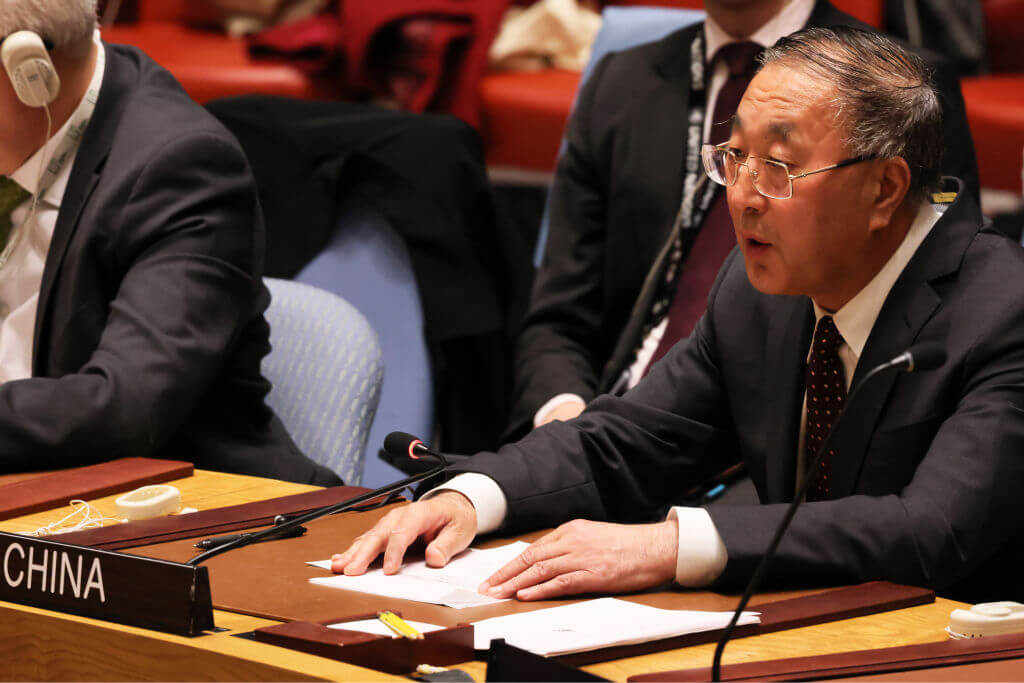

The U.S. and China are opening a new line of international communication just after the U.S. current and former Secretary of State, Antony Blinken and Henry Kissinger visited China.
According to Financial Times, there will be three working groups tackling, the issue connected with Asian-pacific region, maritime tension, and possibly broader areas. The move aims to easier tension between Washington and Beijing regarding the Chinese attitude toward Taiwan combined with the refusal to condemn Russia’s invasion of Ukraine. On the other hand, Beijing hopes that groups help monitor US alliances in the Indo-Pacific and strict export control.
[sc name=”seealso” promowanypost=”1″ ][/sc]
The move is one of the sights of progress towards the goal Joe Biden and Xi Jinping agreed on in Bali in November. Moreover, the efforts are aimed at recreating the official line of dialogue that operated under previous administrations.
The idea of launching the U.S.-China open communication line appeared after a break connected with a Chinese spy balloon accident over the U.S. As the U.S. side emphasizes, the most important are the results, and they are not interested in talks for the sake of talks about how it used to exist in the past.
The initiative is another instalment of the détente in U.S.-China relations. Despite mutual distrust and numerous crises between Beijing and Washington, there has been a noticeable improvement in relations between the powers, which is visible for several months.
Author:
Szymon Polewka is a student of international relations at the Jagiellonian University in Kraków, specializing in the history of international relations, the Eurasian region, DACHL countries, intercultural relations, and the energy sector. He is currently on a scholarship at the University of Bremen. He has gained experience organizing the 2020 Economic Forum in Karpacz and numerous youth and student associations, such as AIESEC or Koło Naukowe Wyzwań Zielonego Ładu.
This article was written as part of the statutory activities of the Polish think tank Warsaw Institute. If you appreciate the content prepared by our partner, we appeal to you for financial support for this non-profit organisation.
More information:
www.warsawinstitute.org/support/
