
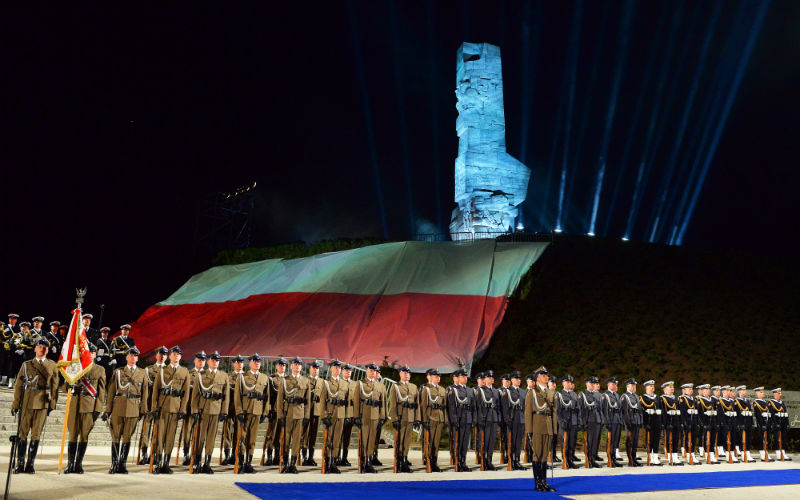

From this year, the 8 May is now celebrated as National Victory Day and is a national holiday marking the end of World War II.
A bill signed by President Bronisław Komorowski on Thursday exchanges the previous 9 May date to a day earlier, scrapping an earlier decree dating from after the war set by the communist regime.
The new law was rubberstamped by the Sejm lower parliamentary house back in April, with the Senate following suit this Wednesday. The wording of the bill “commemorates the victory over Nazi Germany”.
The move to change the date which Poland commemorates as the end of World War II was proposed by the ruling Civic Platform and was generally agreed upon by all MPs.
However, during a parliamentary debate on the issue, the opposition Law and Justice had reservations regarding the wording of the document, saying that in May 1945 Poland went from being in “Nazi captivity” to being under the influence of “Soviet despotism” in the decade after the war.
Celebrations
As part of the ‘new’ date commemorating National Victory Day, Poland’s Defence Minsitry is putting on an army ‘picnic’ in Warsaw’s Saski park near the Tomb of the Unknown Soldier.
A number of military vehicles are to be put on display, including a Rosomak multi-purpose transporter, Leopard tank and a Dana self-propelled artillery gun.
President Komorowski is also to take part in the events on Friday evening to mark the occasion.
Change of date
The end of World War II took place on 8 May 1945 when Field Marshal Wilhelm Keitel signed off Nazi Germany’s unconditional surrender in Berlin, at 10.30pm local time, with the war ending at precisely 11.01pm.
However, due to a difference in time zones it was already 9 May in Moscow, hence Russia’s choice to commemorate that date. The date was used by the communist government in Poland, and up until the early 1950s was also a day off work.
